Almost all of the world’s shallow-water coral reefs face an extremely high risk of total ecosystem collapse within the next 50 years, according to a landmark global assessment released by the International Union for Conservation of Nature. The world authority on threatened wildlife designated 96 percent of the planet’s coral reef systems as critically endangered, placing them in its highest risk category with complete extinction possible by 2075.
Rising global temperatures driven by climate change present an immediate peril to marine environments. Corals are exceptionally heat-sensitive organisms, making them uniquely vulnerable to human-induced ocean warming that triggers increasingly frequent and severe marine heatwaves and mass bleaching events.
Highlighting the gravity of the situation during a press conference at the UN COP17 biodiversity summit in Yerevan, Armenia, scientific lead Mishal Gudka outlined the overarching danger facing marine life. Gudka stated, “The future threat of climate change is looming and severe, and that poses a very high risk to the survival of these ecosystems.”
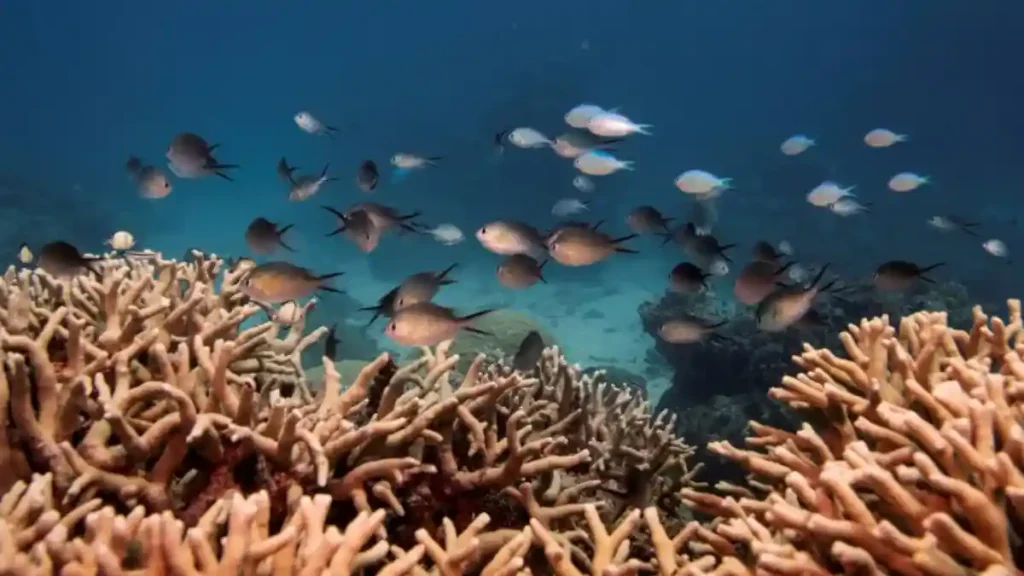
When a coral system suffers total structural collapse, living hard corals vanish and are rapidly replaced by fleshy algae, rocky rubble, and sponges. This ecological collapse eliminates the complex habitat required to sustain diverse marine food webs, which support everything from tiny invertebrates to valuable commercial fish species like grouper.
The study analyzed 127 distinct tropical and subtropical reef systems spanning over 188,000 square kilometers using climate projection models where global temperatures rise by 2.7 degrees Celsius above pre-industrial levels by 2100. Iconic marine environments across the globe, including Australia’s Great Barrier Reef, the Coral Triangle in the Pacific, the Mesoamerican Barrier Reef, and the Red Sea reef networks, are all now categorized as critically endangered.
These fragile underwater habitats, often referred to as rainforests of the sea, host approximately one-quarter of all marine life despite covering a tiny fraction of the ocean floor. Beyond supporting biodiversity, coral reefs generate critical income through local fisheries and tourism while serving as vital natural barriers that protect coastal communities from storm surges and erosion.
Despite the severe findings, conservation scientists emphasize that total marine loss is not inevitable if immediate protective steps are taken. Gudka noted that corals possess natural recovery mechanisms if granted proper environmental protection. Gudka explained, “Coral reefs have shown a remarkable ability to bounce back from devastating bleaching events. Pockets of surviving, resilient coral reefs can still remain in the future, so we must do everything within our reach to set them up for success.”
The IUCN report serves as an urgent wake-up call for global leaders, highlighting the immediate need to curb greenhouse gas emissions and safeguard marine biodiversity. If shallow-water coral reefs collapse, millions of coastal residents will lose essential food sources, economic stability, and vital natural storm protection. Moving forward, international efforts must combine rapid carbon reduction targets with localized conservation strategies, such as establishing marine protected areas and cultivating heat-resistant coral strains. Over the coming decades, targeted conservation funding and strict environmental policies will determine whether these precious ocean ecosystems survive or disappear completely.
Sources / References
- Al Jazeera Report on IUCN Global Coral Reef Extinction Assessment
- IUCN Red List of Coral Reef Ecosystems Global Assessment Findings
- UN COP17 Biodiversity Summit Statements, Yerevan, Armenia