Canada is accelerating its efforts to become a major player in the global liquefied natural gas market. However, this aggressive expansion has triggered intense debate across the country. As the federal government fast-tracks multi-billion-dollar energy infrastructure developments, environmental advocates, human rights experts, and local residents are raising major red flags regarding corporate accountability, environmental degradation, and long-term economic strategy.
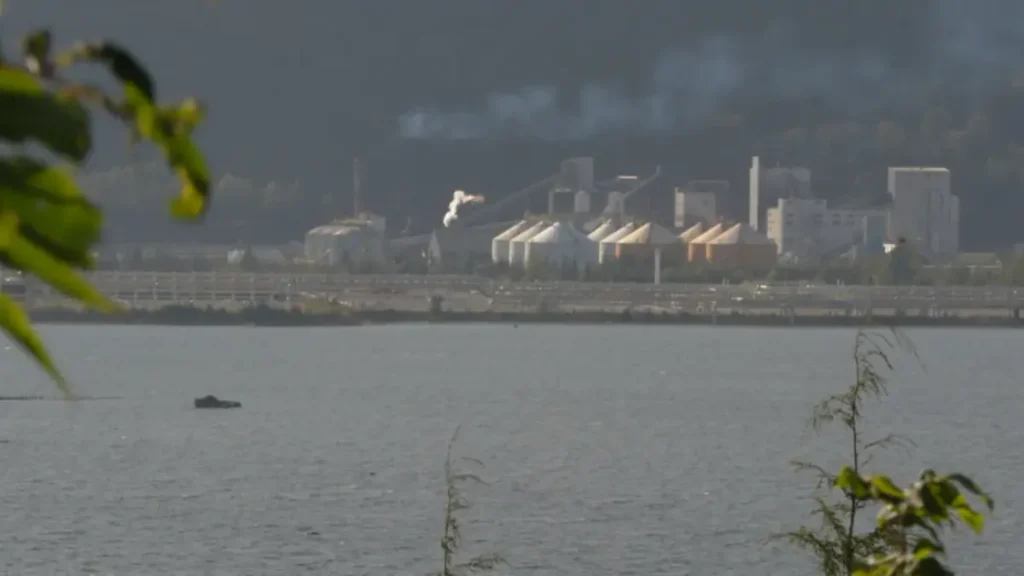
The center of this debate is the LNG Canada export facility located in Kitimat, British Columbia. The site began initial operations in mid-2025 as the nation’s premier large-scale export terminal. Project leadership recently approved a massive $33 billion expansion phase designed to double production capacity over the coming years. Despite these ambitious financial goals, the facility has faced persistent operational challenges since initial testing began in late 2024.
Throughout 2025, a critical technical problem with the plant’s main flare stack forced the facility to burn off more than 350 million cubic meters of gas. This massive release placed the site among the top global sources of industrial flaring emissions for the year. Local residents reported severe noise disruptions and noticeable declines in surrounding air quality, while learning about the full extent of the equipment failure only through independent media reports.
Reflecting the personal strain experienced by local families, one Kitimat resident highlighted the severe everyday impacts, stating, “The flaring noise was on a whole other level when they were first getting started up. It was just huge, way bigger than I think it was supposed to be.” Another community member expressed deep sorrow over the changing landscape, sharing, “I am devastated about the changes to my home territory. I can’t always see the stars like I used to from my parents’ place here. My friend returned temporarily, and her asthma has been much worse.”
The rapid push to expand gas infrastructure aligns directly with broader economic pressures facing Ottawa. Following a series of sweeping trade tariffs imposed by the United States administration on Canadian goods, including steel, aluminum, lumber, and textiles, federal leaders are working to diversify global trade alliances and strengthen domestic industrial projects. Prime Minister Mark Carney’s administration added major natural gas developments to a specialized federal list, establishing a dedicated Major Projects Office to streamline approvals and reduce regulatory delays.
Speaking at a news conference in Vancouver, Prime Minister Carney highlighted the streamlined federal approval process, stating, “Canada is building big again. A year ago, the federal government referred LNG Canada Phase 2 to our Major Projects Office. One office. One point of contact. One goal: get to the right decision, rapidly and efficiently. Working with Shell and LNG Canada, British Columbia and First Nations, we have accomplished exactly that.”
However, economic analysts caution that fast-tracking large-scale extraction projects under the banner of economic security creates long-term risks. Senior economist Marc Lee of the Canadian Centre for Policy Alternatives argued that federal priorities remain focused strictly on short-term capital investments rather than environmental stewardship or community impacts. Lee criticized the government’s approach, remarking, “None of that matters to the federal government. It’s all about investment.”
Lee further noted that the pressure to constantly secure new infrastructure capital forces the country to liquidate finite natural resources at low prices. He explained, “I don’t think it’s part of some broader strategic game around diversifying from Trump or supporting the energy transition. It’s just pure growth and extraction for very short-term benefit and long-term costs. We’re essentially promising to liquidate this resource that should be the inheritance of British Columbians for hundreds of years into the future, and we’re squandering it all at bargain-basement prices. It’s like this bicycle you have to keep pedalling or you fall off. You always need this new capital investment. That’s what the governments are chasing right now.”
Critical scrutiny has also focused on the international corporate consortiums driving these developments. LNG Canada is owned by a joint partnership featuring Shell as the majority stakeholder alongside Petronas, Korea Gas, PetroChina, and Mitsubishi. Several participating firms carry controversial international track records, including past litigation related to severe environmental pollution and community displacement in regions such as the Niger Delta.
Addressing Shell’s historic operations in West Africa, York University professor Anna Zalik emphasized the stark contrast between corporate PR and historical reality, noting, “The firm has been associated with these major human rights violations and all sorts of legal cases around actual violence against communities and severe environmental devastation in Nigeria, and yet tries to act as if their operations here are somehow not the same as their operations there. Their track record demonstrates an attempt to evade responsibility and liability for the pollution that they cause.”
In response to these criticisms, corporate representatives defended their global operations. A Shell spokesperson rejected the characterization of its historical record, writing in an official statement, “Shell is committed to honesty, integrity and respect for people, and to conducting its business in an ethical and transparent manner, in accordance with applicable laws and regulations where we operate.” The company added that past operational issues in Nigeria involved “complex and contested issues” tied to illegal refining, sabotage, and criminal activity.
Domestically, supply pipeline construction has also faced significant pushback. The Coastal GasLink pipeline, built to supply the Kitimat export facility, crossed unceded Wet’suwet’en territories without the consensus of traditional Hereditary Chiefs, triggering widespread national protests. Similar concerns surround proposed pipeline corridors for the Ksi Lisims LNG project, where neighboring First Nations maintain they were not adequately consulted.
Corporate accountability advocates emphasize that current legal frameworks lack the mechanisms needed to enforce international human rights standards on domestic corporate partners. Aidan Gilchrist-Blackwood of the Canadian Network for Corporate Accountability pointed out the systemic nature of these gaps, stating, “These companies have a lot of money, a lot of influence, and it’s a lot easier for them to get their message out there. When we’re talking about communities who are having their human rights violated, we’re talking about communities that are structurally disempowered compared to those companies.” He added, “This pattern of widespread and systemic human rights abuses linked to Canadian companies is the result of intentional policy decisions. I think that’s something that surprises a lot of people, that there’s a lack of even that basic level of legal accountability.”
As Canada doubles down on its multi-billion-dollar energy strategy, the rush to secure export revenue threatens to overshadow vital environmental safeguards and Indigenous consent. The ongoing expansion of export facilities in British Columbia will serve as a major test case for how national energy policy balances economic growth against strict climate targets and human rights responsibilities. Over the coming years, regulatory oversight, community resistance, and legal challenges will determine whether these massive investments bring lasting prosperity or entrench long-term environmental and political liabilities across the region.
Sources / References
- Al Jazeera English In-Depth Report on Canadian LNG Expansion and Corporate Criticisms
- The Narwhal Environmental News Investigations on Kitimat Industrial Flaring
- Official Statements from the Prime Minister’s Office and the Privy Council Office of Canada
- Research Reports by the Canadian Centre for Policy Alternatives (CCPA) and the Canadian Network for Corporate Accountability (CNCA)