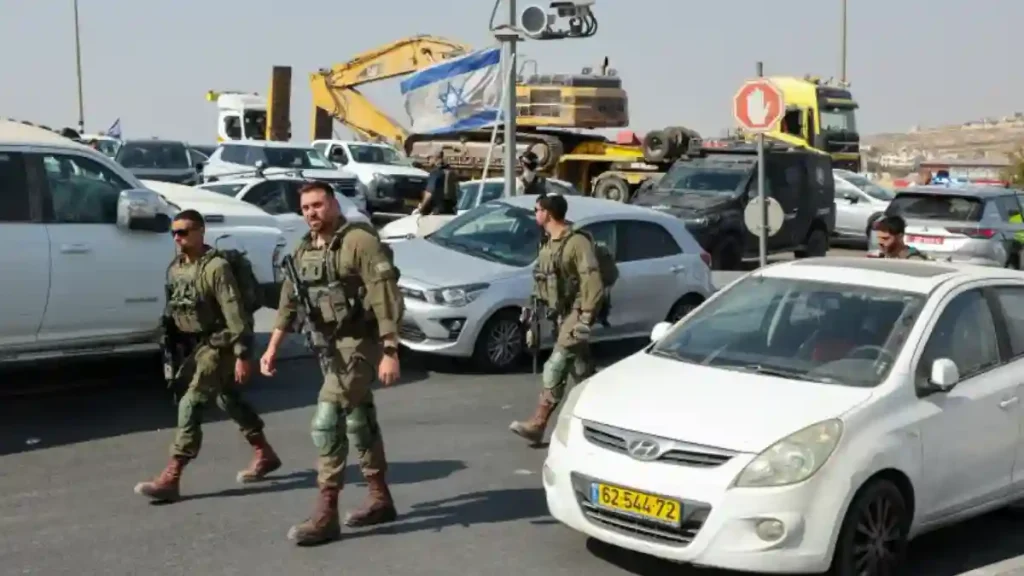
The Israeli military has initiated a sweeping multi-day offensive across the occupied West Bank, deploying security forces to conduct mass arrests, demolish residential properties, and enforce widespread displacement. The military escalation follows an armed confrontation at a checkpoint near Hebron that left two Israeli soldiers dead, with the suspected Palestinian assailants killed at the scene.
Prime Minister Benjamin Netanyahu ordered a complete lockdown of the territory and announced plans for aggressive house-to-house incursions in the Hebron neighborhood from which the suspects originated. The military campaign utilizes tactics previously deployed in northern refugee camps, combining heavy armor, bulldozers, and localized curfews.
Outlining the government’s objectives for the offensive, Prime Minister Benjamin Netanyahu addressed security forces and the public. Netanyahu stated, “We will act to destroy this place, to change it completely.”
Human rights organizations immediately condemned the operation. The Israeli rights group B’Tselem issued a formal warning that the military offensive amounts to collective punishment and actions that could constitute war crimes under international law.
By Saturday morning, military raids had expanded to at least 15 towns across the northern West Bank, including Nablus, Jenin, Tubas, and Qalqilya, resulting in dozens of detentions. In Hebron, military bulldozers demolished a multi-story building and forced hundreds of residents to evacuate the Ein Deir Bahha area. Local municipal officials reported that up to half of the targeted neighborhood had been forcibly emptied, leaving roughly 200 families displaced without shelter.
The lockdown has severed transportation routes across the territory, with regional checkpoints closed and district entrances heavily restricted. United Nations representatives and international observers expressed profound alarm over the deteriorating humanitarian conditions, noting that sweeping movement restrictions cut civilians off from essential medical care, food supplies, and daily livelihoods.
The intensification of military operations coincides with a surge in settler violence during the annual olive harvest season, alongside broader regional tensions involving strategic military planning with the United States. As far-right government ministers call for expanded offensives, local populations face deepening isolation and uncertainty.
The extensive military offensive and full territorial lockdown risk pushing the occupied West Bank into a severe humanitarian and security crisis. As Israeli forces continue sweeping raids and residential demolitions, the widespread displacement of hundreds of families will heighten civilian suffering and strain local emergency response networks. Human rights watchdogs and United Nations officials will likely increase pressure on international diplomatic channels to demand an end to collective punishment measures.
Over the coming days, the trajectory of the operation will depend on whether regional tensions escalate further or international mediation succeeds in restoring humanitarian access. Ultimately, these aggressive military tactics threaten to eliminate prospects for political de-escalation and deepen long-term instability across the entire region.
References / Source Links
- Al Jazeera English Report on Israeli Military Operation in West Bank
- Official Statements from the Israeli Prime Minister’s Office and Military Command
- Human Rights Reports from B’Tselem and United Nations Office of the High Commissioner for Human Rights (OHCHR)