A powerful sequence of back-to-back weather systems has swept across northern Europe, unleashing hurricane-force gusts and torrential rain that left widespread structural damage in their wake. Identified by meteorologists as storms Boelo and Austen, the twin weather fronts battered the region within a twenty-four-hour window, resulting in one fatality, multiple injuries, and significant blackouts affecting over 150,000 households.
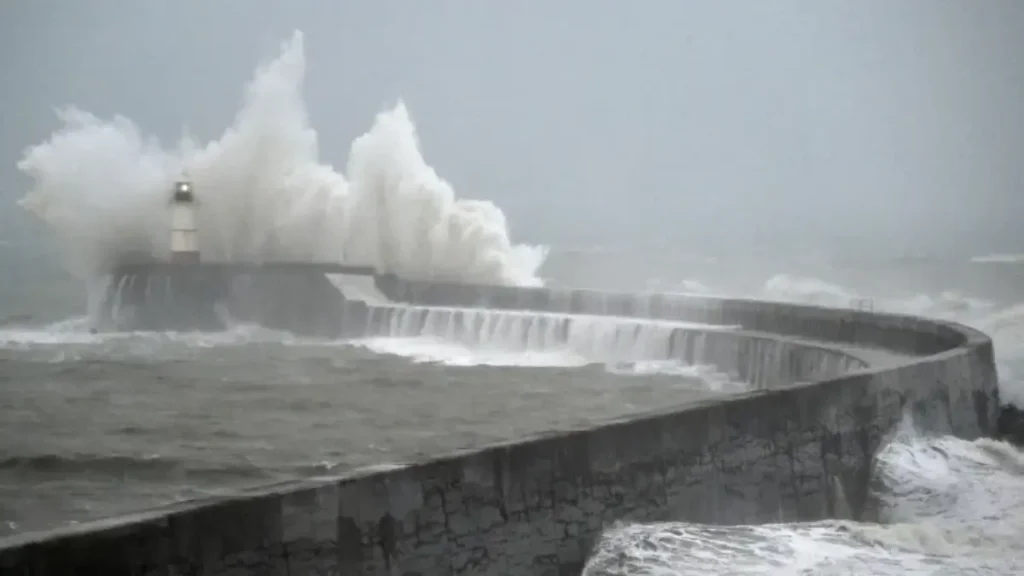
The destructive weather system severely impacted the United Kingdom, where wind speeds reached up to eighty-four miles per hour in parts of western Scotland. Tragically, a falling tree struck and killed a sixty-year-old man in southwestern Scotland, while a separate falling tree injured two women in central England. Downed trees and snapped power lines blocked major railway corridors and roadways across northern England and Scotland, while coastal areas experienced severe structural impacts, including the collapse of an unused pier in Brighton.
Emergency services and national meteorological agencies issued severe weather warnings across vulnerable regions. Highlighting the extreme hazards posed by the gales, the United Kingdom Met Office issued clear public safety directives, stating:
“Boelo would bring a danger to life from flying debris and crashing waves and said people should stay indoors as much as possible.”
Across the English Channel, the severe autumn front inflicted heavy damage throughout France, Germany, and the Low Countries. French energy providers reported that hundreds of thousands of properties experienced blackouts at the height of the storm, with tens of thousands of homes remaining disconnected in regions like Normandy and Brittany by Sunday afternoon. Falling debris and high winds also caused minor injuries, including an incident involving a participant during a marathon race in northern France.
In Germany, the severe gales knocked out power grids in southwestern towns, forcing local medical centers to restrict operations to emergency cases only after mobile phone networks and electricity supplies failed. High winds also caused structural collapses at local markets, leaving individuals seriously injured. Meanwhile, maritime transport faced severe hazards; Dutch coastguards deployed rescue helicopters to airlift injured crew members from a distressed freight vessel off the northern coast.
Transportation hubs experienced widespread chaos as the severe weather forced the cancellation and diversion of hundreds of commercial flights, most notably at Amsterdam’s Schiphol Airport. Rail operators and municipal authorities continue clearing debris and repairing damaged infrastructure as communities assess the full scope of the autumnal storm damage.
The sudden onslaught of storms Boelo and Austen highlights the growing vulnerability of regional infrastructure to severe meteorological events. As extreme weather patterns become more frequent across Europe, emergency preparedness and grid resilience will be essential to mitigating risks to human life and property. Strengthening physical defenses and modernizing energy networks against severe gales will dictate how effectively nations manage similar climate-driven challenges in the future.
References / Source Links
- Met Office (UK): https://www.metoffice.gov.uk
- Enedis: https://www.enedis.fr
- Schiphol Airport: https://www.schiphol.nl