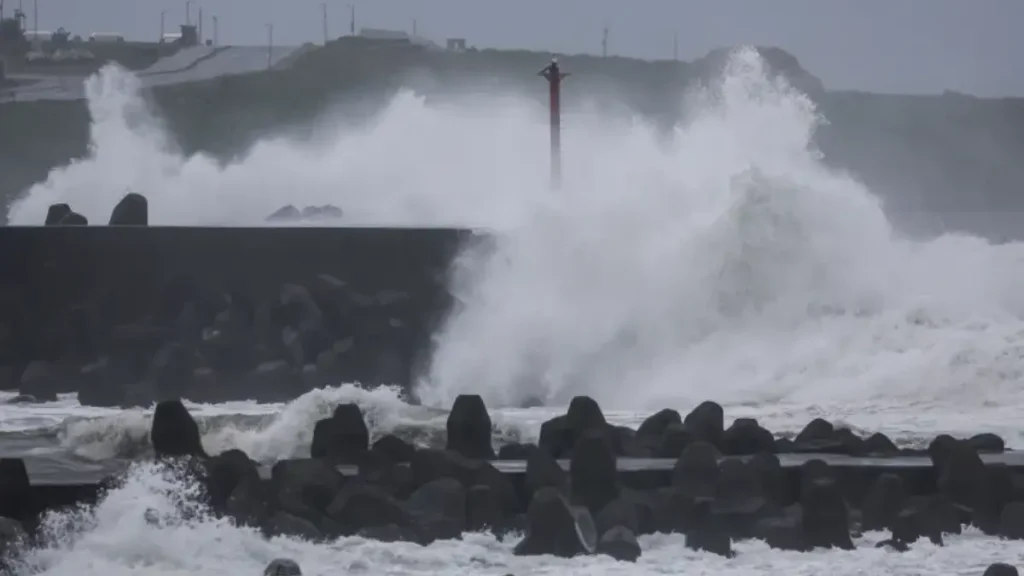
A powerful storm system, Typhoon Champi, battered the northeastern coast of Taiwan, resulting in one fatality and injuring more than 500 people. Emergency services urged residents across northern regions to seek shelter as destructive winds and torrential rainfall caused widespread damage, toppled trees, and forced the evacuation of over 5,000 residents from high-risk zones.
The extreme weather event severely disrupted power grids and regional transportation networks. Utility crews worked urgently on Saturday to restore electricity to approximately 56,000 homes that remained without power. While flight disruptions showed slight improvement on Saturday with 259 canceled flights compared to nearly 1,000 cancellations on Friday, commercial operations and public transportation across northern Taiwan remained largely paralyzed.
Although the storm weakened from its initial super typhoon status—which previously packed winds reaching nearly 300 kilometers per hour—it continued to deliver high-intensity squalls. According to data from the US Joint Typhoon Warning Center, maximum sustained winds hovered around 185 kilometers per hour as the storm looped off the coast of Yilan.
Forecasters from Taiwan’s Central Weather Administration warned that prolonged rainfall posed severe ongoing risks, with accumulated precipitation estimates reaching up to 900 millimeters in northeastern regions like Yilan County. Expressing the sheer intensity of the overnight storm, retired teacher Lin reflected on the damage in his garden. Lin stated, “It was a sleepless night. I haven’t seen anything like this in many years.”
As the storm system slowly tracks away from Taiwan, meteorologists report that Typhoon Champi is moving north toward the eastern coast of mainland China and Japan. In Japan’s southern Okinawa prefecture, the storm knocked out power to over 8,400 homes and caused minor injuries. Meanwhile, Chinese weather agencies issued heavy rain alerts for coastal hubs including Shanghai, Jiangsu, and Zhejiang, triggering mass evacuations and train service suspensions.
Climatologists note that Typhoon Champi’s extraordinary intensity is amplified by an unusually strong Pacific climate pattern. Commenting on the broader global weather context, World Meteorological Organization Secretary-General Celeste Saulo highlighted the extreme nature of current environmental conditions. Saulo remarked, “The current El Nino event could be unprecedented in strength. Literally off the monitoring charts that we have used for the past four decades.”
The severe damage caused by Typhoon Champi emphasizes the growing vulnerability of East Asian coastal communities to climate-driven storm systems. As the typhoon moves toward mainland China and Japan, emergency response teams must maintain high readiness to handle severe flooding and power outages. With El Niño conditions expected to intensify global weather volatility, regional governments face increasing pressure to upgrade flood defenses and coastal infrastructure. Over the coming days, international transport networks will work to clear flight backlogs while emergency workers rebuild damaged power grids. Ultimately, this storm highlights the urgent need for long-term climate adaptation strategies across the Asia-Pacific region.
Sources / References
- Al Jazeera English News Report on Typhoon Champi Impacting Taiwan
- Official Meteorological Bulletins, Taiwan Central Weather Administration (CWA)
- World Meteorological Organization (WMO) Global Climate and El Niño Briefings