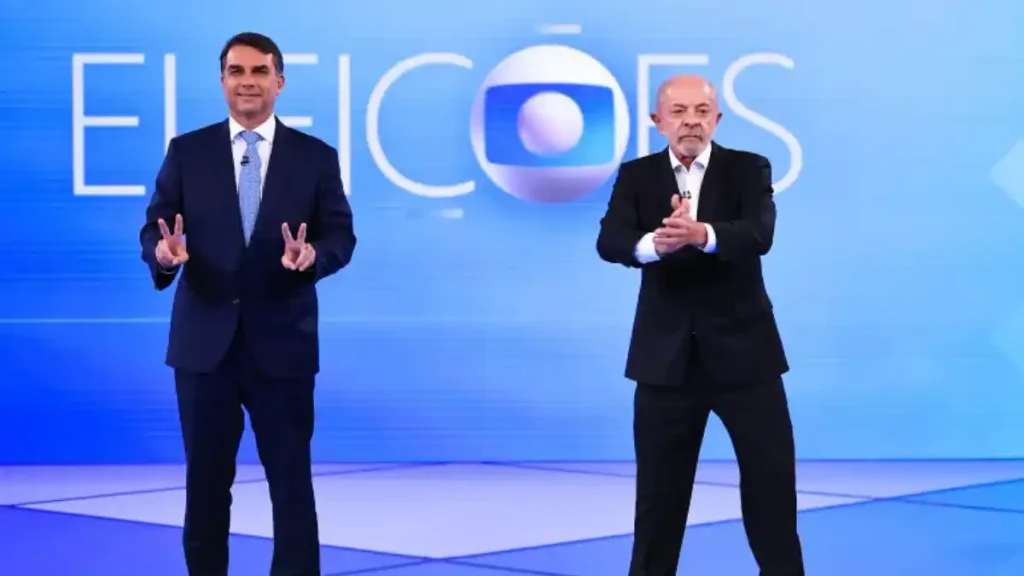
Brazilian President Luiz Inacio Lula da Silva and his right-wing challenger, Senator Flavio Bolsonaro, traded sharp policy criticism on Friday in their final televised debate before Sunday’s decisive presidential run-off. Broadcast nationally on TV Globo from Rio de Janeiro, the debate saw both candidates focus heavily on economic strategy, public safety, and national infrastructure as they made their last pitches to millions of undecided voters.
Throughout the broadcast, the candidates challenged each other directly on fiscal governance and fiscal reform. President Lula questioned his opponent’s proposal to dramatically slash government spending, drawing comparisons to aggressive austerity measures implemented in neighboring Argentina.
Responding firmly to the criticism regarding spending cuts, the right-wing senator defended his proposed economic overhaul by targeting the current administration’s fiscal record. Bolsonaro declared, “I’ll have the same job here [as Milei in Argentina] because you’re leaving the country bankrupt.”
Bolsonaro, the son of former right-wing President Jair Bolsonaro, accused the incumbent administration of allowing organized crime networks to expand, failing to control inflation, and leaving working families burdened by rising household debt. In response, Lula pointed to his own working-class origins as a former metalworker to question his rival’s understanding of poverty and the daily challenges facing ordinary citizens.
Addressing the senator’s background and national perspective during a tense exchange on living costs, President Lula challenged his opponent’s credentials, stating, “He doesn’t know Brazil.”
While the debate maintained a more measured tone than their previous televised confrontation, personal jabs surfaced during several heated exchanges. Bolsonaro used a long-standing pejorative nickname referencing an industrial workplace injury Lula suffered decades ago, prompting the 80-year-old president to request a formal apology, which Bolsonaro granted on air. Lula countered by accusing his rival of maintaining ties to paramilitary groups in Rio de Janeiro, an allegation Bolsonaro rejected while proposing to classify those organizations as “narcoterrorists.”
The high-stakes debate comes as public opinion surveys show an extremely tight contest heading into Sunday’s final vote. In the first round of voting on October 4, Bolsonaro finished in first place with 47 percent of the vote compared to Lula’s 45 percent. However, recent polling data published by the Datafolha institute indicates a dead heat, with both candidates holding 50 percent of support in valid votes. With election day looming, both political camps are organizing massive final rallies across major metropolitan hubs like Rio de Janeiro and Sao Paulo to mobilize turnout.
The outcome of Sunday’s presidential run-off between President Lula and Flavio Bolsonaro will shape the future direction of Latin America’s largest economy. As voters weigh competing visions regarding fiscal policy, social welfare spending, and public security, the tight polling suggests that turnout in major urban centers will prove decisive. The election results will also determine Brazil’s diplomatic orientation and environmental stewardship across critical regions like the Amazon basin.
Over the coming days, electoral authorities will oversee ballot counting across thousands of voting centers to ensure a transparent transfer of power. Ultimately, the new administration will face immediate political challenges in managing a polarized congress while attempting to deliver on economic promises.
References / Source
- Al Jazeera English Report on Brazil Presidential Debate and Run-Off
- TV Globo Presidential Debate Broadcast Archives
- Datafolha Institute Electoral Survey Bulletins
- Lula and Bolsonaro Clash in Final Presidential Debate