Political tensions across Andhra Pradesh have reached a fever pitch following the suspension of democratic proceedings across 100 urban local authorities. Acting on instructions from the Supreme Court, the State Election Commission halted operations across 13 municipal corporations alongside 87 smaller municipalities and local councils. The judicial intervention comes in the wake of widespread political clashes and official complaints regarding suppressed candidate registrations during the ongoing municipal election cycle.
The electoral conflict centers on fierce rivalry between the governing Telugu Desam Party and the opposition Yuvajana Sramika Rythu Congress Party. Representatives from the main opposition allege that aggressive intimidation tactics systematically blocked their members from submitting mandatory candidacy paperwork before key deadlines. While lower judicial bodies initially declined requests to prolong filing periods, India’s highest court subsequently stepped in, ordering law enforcement leadership to guarantee physical safety for candidates and pushing key polling dates back to early November.
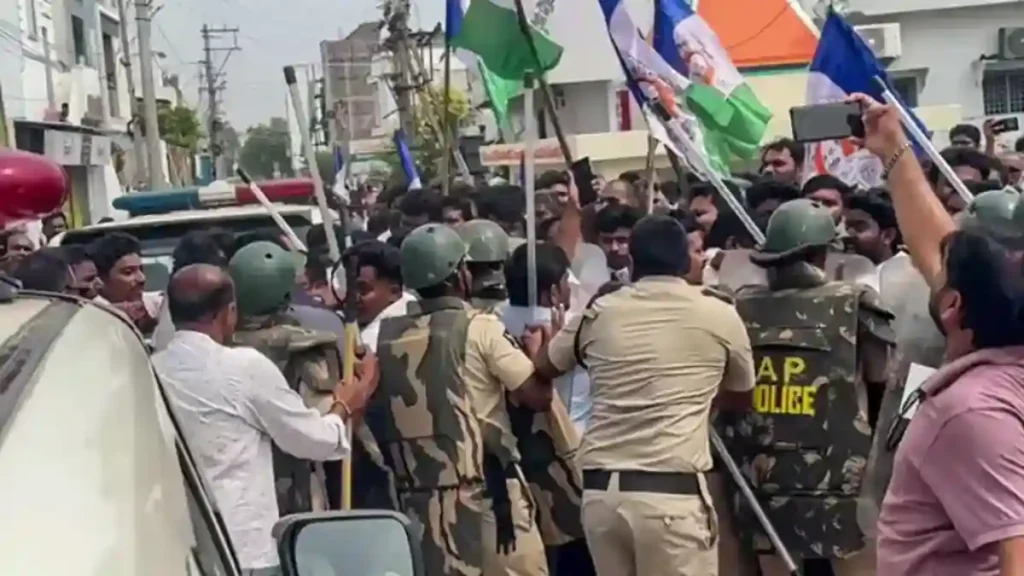
To accommodate filing disruptions, election administrators granted temporary filing extensions across selected contested districts, including major municipal zones like Tirupati and Kadapa. Despite heavy security deployment, state police documented dozens of violent altercations surrounding registration centers. Authorities carried out temporary detentions and house arrests involving senior opposition figures to prevent escalating street skirmishes between opposing party supporters.
Opposition leaders contend that governing coalition workers used force out of fear of electoral defeat, claiming that security forces failed to remain neutral during local registration drives. They argue that coordinated hostility prevented scores of candidates from entering municipal races across multiple districts.
Conversely, state leadership has forcefully rejected all allegations of electoral interference. Chief Minister N Chandrababu Naidu placed the blame for regional disruption squarely on opposition shoulders, accusing political rivals of organized violence across several municipalities. Outlining his concerns regarding opposition tactics during public remarks, Naidu alleged that “they (YSRCP) have tried to create hindrances in local body polls from day one. YSRCP is resorting to criminal politics,” while asserting that rival leadership systematically leveraged partisan media outlets and bad-faith court petitions to undermine state credibility and disrupt democratic processes.
The judicial pause in the Andhra Pradesh civic polls underscores how localized administrative contests can evolve into high-stakes political battlegrounds. With mandatory security measures now mandated by top judicial authorities, the upcoming rescheduled voting will serve as a crucial barometer of electoral integrity and public sentiment across the state. The ability of administrative bodies to ensure transparent proceedings amid intense partisan rivalry will significantly influence regional governance stability, local policy execution, and voter trust moving forward into the final polling phase.
References / Source
- Andhra Pradesh State Election Commission: https://sec.ap.gov.in
- Supreme Court of India: https://main.sci.gov.in
- High Court of Andhra Pradesh: https://aphc.gov.in