

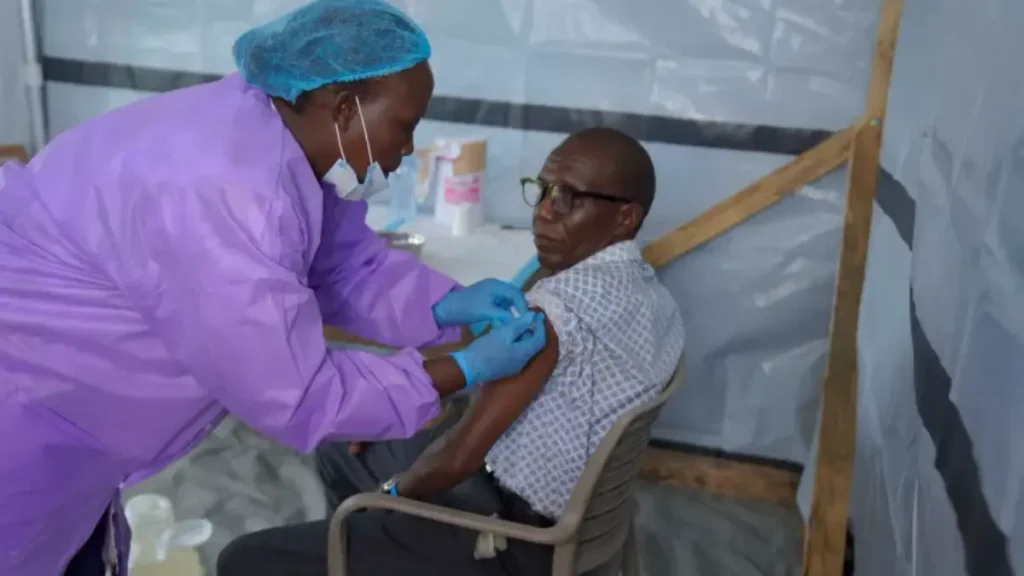
The World Health Organization announced the launch of the first clinical trial for an Ebola vaccine during the ongoing epidemic in the Democratic Republic of Congo. Healthcare workers in Bunia, the capital of the northeastern Ituri province and central focus of the outbreak, began administering doses to study volunteers on Friday as international health agencies work to curb transmission.
The clinical study, designated as the Tumaini trial, utilizes the approved Ervebo vaccine, which was originally developed to protect against the Zaire strain of the Ebola virus. Researchers aim to determine whether this existing immunization offers cross-protection against the Bundibugyo species responsible for the current health crisis.
Detailing the purpose of the research initiative, World Health Organization Director General Tedros Adhanom Ghebreyesus shared updates on social media regarding the field work in Bunia. Tedros stated, “This trial will help us understand whether any of the vaccine candidates designed for Bundibugyo virus work.”
Emphasizing international support for local leadership during the emergency response, Tedros added, “WHO is supporting this DRC-led effort to find answers and save lives.”
The Democratic Republic of Congo declared its 17th Ebola outbreak in May, which has since grown into its most severe epidemic on record. Health agencies have documented over 9,700 confirmed cases and more than 4,600 fatalities. The rapid expansion prompted the World Health Organization to issue a public health emergency of international concern, marking its second-highest global alert level.
Beyond central Africa, the virus has spread to four nations spanning eastern, central, and western regions of the continent. This multi-country expansion represents the widest geographic footprint recorded for any Ebola epidemic in African history.
To maximize protection, the trial employs a ring vaccination strategy, immunizing high-risk contacts immediately surrounding confirmed cases. The single-trial framework allows researchers to simultaneously evaluate the safety, efficacy, and immune response of multiple candidate vaccines under real-world conditions.
The study will soon integrate two specialized candidate vaccines specifically engineered to combat the Bundibugyo strain. These include an adenoviral vector vaccine developed by the University of Oxford and an mRNA-based candidate created by Moderna, both supported financially by the Coalition for Epidemic Preparedness Innovations.
Crucially, the trial protocol includes pregnant women and children aged 12 and older, ensuring that traditionally excluded populations receive medical protection and generate critical clinical data. World Health Organization emergencies director Chikwe Ihekweazu noted that the trial is structured to produce rigorous scientific evidence confirming whether these candidate vaccines can safeguard high-risk individuals.
The launch of the Tumaini trial marks a pivotal moment in fighting the record-breaking Ebola surge across the African continent. If the Ervebo vaccine demonstrates cross-protection or candidate shots prove effective, public health teams will gain vital tools to halt transmission chains in high-risk zones. Expanding clinical trials to include pregnant women and older children ensures that key demographic groups receive necessary protection during active community spread. Moving forward, international health bodies will monitor trial data closely while accelerating manufacturing pipelines for candidate vaccines. Over the coming months, successful ring vaccination campaigns could help contain the virus, prevent further international spread, and establish clear clinical standards for future Ebola outbreaks.
Sources / References
- Al Jazeera English Report on WHO Ebola Vaccine Trial in DR Congo
- Official Statements from WHO Director General Tedros Adhanom Ghebreyesus
- Coalition for Epidemic Preparedness Innovations (CEPI) Trial Framework Bulletins